The oil and gas industry in the Gulf operates in some of the world’s most demanding environments, where even minor delays in sourcing or fabricating components can affect uptime, safety, and project delivery. As operators look for ways to strengthen supply chains and localise production, additive manufacturing has become a practical tool for engineering teams across the region.
From the UAE to Saudi Arabia, 3D printing is no longer an experimental technology. It is being used to produce functional pipe fittings, connectors, and spare parts that meet stringent performance requirements, with in-region examples showing clear reductions in lead times and greater control over complex fabrication workflows.
Momentum across the GCC
Across the region, national strategies are encouraging the shift from imported components to locally produced, digitally driven manufacturing. The UAE’s early 3D printing initiatives and Saudi Arabia’s broader Vision 2030 agenda have helped accelerate industrial adoption, especially in sectors such as oil and gas where operational agility matters most.
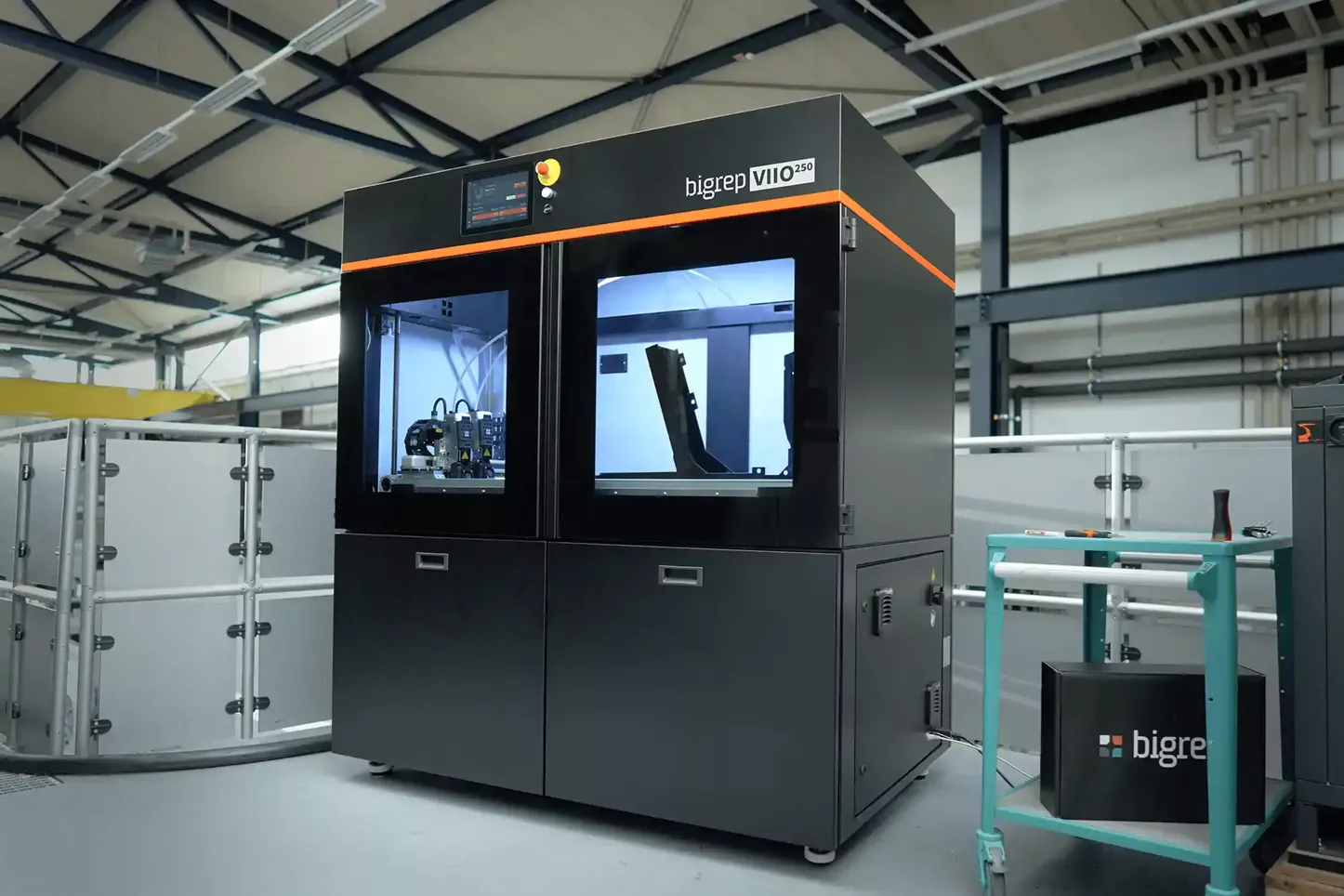
Within this landscape, engineering teams are turning to large-format FFF systems for rapid prototyping and production. In Abu Dhabi, for example, a leading oil and gasket manufacturer uses the BigRep Studio G2 system to produce custom pipe fittings and connectors, taking advantage of its design flexibility and wide material compatibility.
ADNOC Gas has publicly highlighted the value of 3D printing for critical components, reporting production time reductions of up to 50%. Similarly, Saudi Aramco’s Zuluf programme has introduced large-scale gantry printing to support on-site structures and complex geometries. These developments collectively underline a regional shift: additive manufacturing has moved from proving grounds into mainstream engineering practice.
Performance for real operating environments
While speed and flexibility are important, adoption ultimately depends on whether printed components can withstand the sector’s technical demands. Research across the GCC confirms strong feasibility for fittings exposed to pressure, vibration, and corrosive elements. International programmes such as AML3D’s verification of a large-scale printed spool under API 20S standards further support the case for additive manufacturing in mission-critical environments.
Locally, engineering teams are leveraging these advances for practical reasons. Universities and research centres, including those in the UAE, have documented successful deployment of 3D-printed components to replace obsolete parts, support maintenance operations, and reduce downtime. These case studies echo what many operators experience on the ground: the ability to respond immediately to unplanned requirements with designs tailored to site-specific constraints.
Tailored designs for challenging geometries
One of additive manufacturing’s strongest advantages is its ability to free engineers from geometric restrictions. Custom elbows, reducers, and multi-axis connectors can be printed to match existing layouts precisely, reducing the need for on-site modification and significantly simplifying installation.
For organisations using large-format platforms such as BigRep, the scale of the build envelope means full-size fittings can be produced quickly, enabling teams to validate flow behaviour, fitment, or mechanical performance before committing to final production. This moves fabrication closer to the rhythm of field operations, rather than forcing projects to adapt to long manufacturing cycles.
Strengthening the regional supply chain
For the GCC, localisation is not just a strategic goal but a practical necessity. Remote sites, fluctuating global logistics, and the need for rapid maintenance all place pressure on traditional supply chains. 3D printing helps mitigate these challenges by enabling on-demand production and reducing dependency on overseas suppliers.
Local providers in the UAE, including specialised additive manufacturing firms, now support operators with prototypes, replacement parts, and custom piping solutions designed for high-temperature and high-pressure environments. These capabilities align closely with the region’s long-term vision for stronger industrial independence and more sustainable operations.
The path forward
As performance data grows and adoption expands, additive manufacturing is becoming part of the standard engineering toolkit for oil and gas companies across the Gulf. What began as a solution for rapid prototyping has evolved into a reliable approach for producing customised components that meet operational demands.
For organisations in the region, the opportunity is clear: the combination of design freedom, production speed, and local availability offers a more responsive and resilient way to manage complex infrastructure.
Jacky’s Business Solutions continues to support this shift by enabling access to industrial 3D printing technologies such as BigRep’s large-format systems, alongside advisory services that help teams integrate additive processes into their engineering workflows. As the sector evolves, these capabilities will play an increasingly important role in strengthening supply chains and improving project efficiency across the GCC.
For project discussions or technical consultations regarding BigRep, please reach out to support@cuttingedge.solutions